U.S. enterprises spent an estimated $13.8 billion on generative AI in 2024, a 6x jump from the year before, according to Menlo Ventures’ 2024 State of Generative AI in the Enterprise report (https://menlovc.com/2024-the-state-of-generative-ai-in-the-enterprise/). Yet most of those organizations still haven’t trained the people responsible for governing those systems. That gap is where ROI gets created or destroyed. AI governance training, done well, isn’t a soft compliance expense. It compresses audit cycles, reduces incident frequency, and shortens the time from procurement to safe deployment for every model that follows. This piece breaks down what training actually returns, where the savings show up, and how to build a defensible business case for it. [VERIFY: Menlo figure is widely cited but confirm latest version before publication.]
Why AI Governance Training Has a Measurable ROI (Not Just a Compliance Story)
For years, governance training has been pitched as the responsible thing to do. That framing is part of the reason it gets underfunded. Boards approve cybersecurity training because the cost of a breach is a number they can read. AI governance training has lacked that same connection to a P&L line, until recently.
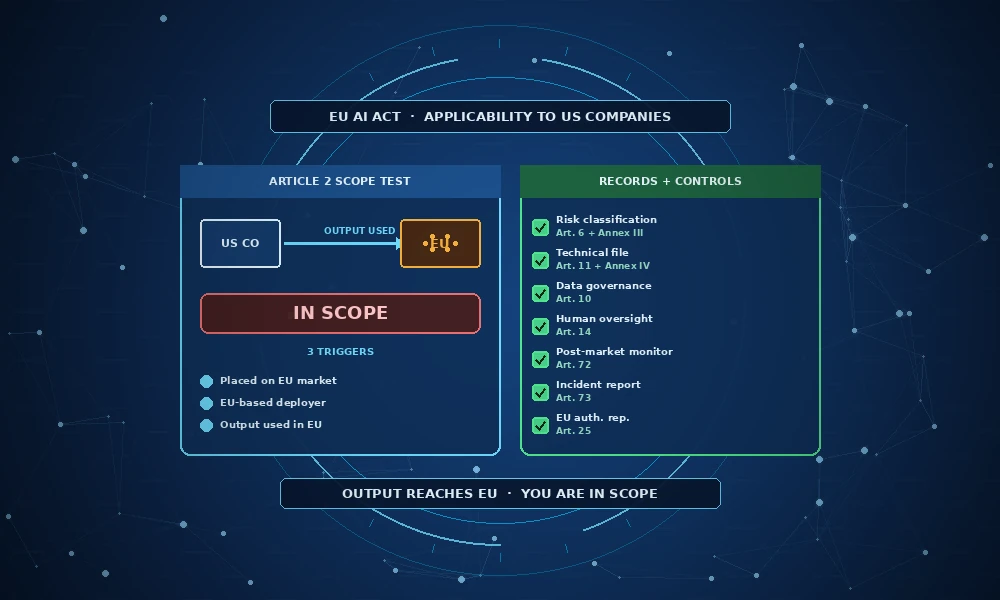
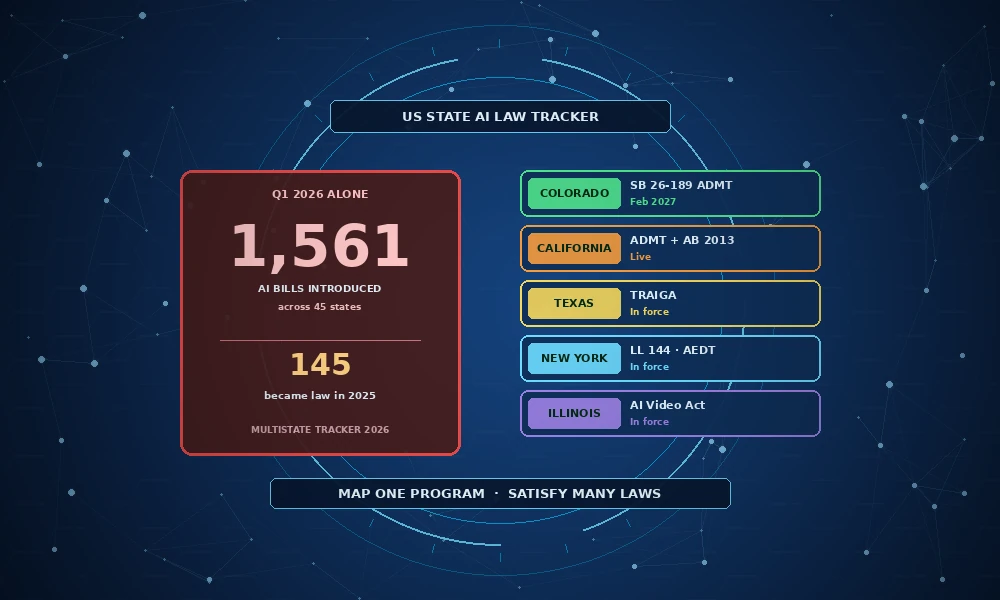
Three shifts changed that. The first: regulators stopped asking nicely. The EU AI Act (https://artificialintelligenceact.eu/) carries fines of up to 7% of global annual turnover or €35 million for prohibited AI practices, and U.S. state laws like Colorado’s SB 24-205 and New York City’s Local Law 144 now impose audit and disclosure obligations on AI used in employment and consumer decisions. The second: enterprise AI usage exploded faster than most internal training programs could keep up. The third: insurance markets started pricing AI risk into cyber and E&O policies, and underwriters started asking what training and oversight programs are in place.
Put together, those shifts mean the question on the table is no longer “should we train people on AI governance”. It’s “what does it cost us if we don’t, and what do we get back if we do.”
The cost of governance failure, in concrete numbers
IBM’s 2024 Cost of a Data Breach Report (https://www.ibm.com/reports/data-breach) found that the average breach cost in the United States reached $9.36 million, and that organizations using AI and automation extensively in security operations saved $2.22 million per incident on average. The same report flagged a new category: shadow AI. Breaches involving unauthorized AI use cost roughly $670,000 more than those without. That gap is, in plain terms, an untrained-workforce premium.
Training is what closes it. Not policy documents. Not a one-time onboarding deck. Trained employees who can recognize an AI system, classify its risk, and route it through the right governance gate before it reaches production.
The Five Categories of Return on AI Governance Training
ROI on AI governance training shows up in five places. Some are easy to measure, some require a baseline, but all of them belong on a CFO-ready business case. The categories below are how Govern365.ai’s customers typically structure the conversation when they’re justifying the spend internally.
| Return Category | What It Looks Like | How to Measure It |
|---|---|---|
| Audit and certification efficiency | Faster ISO 42001 readiness, fewer non-conformities, less rework | Audit days, hours per finding, time from gap analysis to certification |
| Incident reduction | Fewer model failures, bias incidents, data leaks from AI tools | Incidents per quarter, severity distribution, mean time to detect |
| Procurement and deployment speed | Vendor AI tools cleared faster, internal models reach production sooner | Days from request to approval, percentage of stalled requests |
| Regulatory exposure reduction | Lower probability of fines, faster response to enforcement | Frameworks mapped, response time to a regulator query, insurance premium movement |
| Talent retention and capability | Lower attrition in compliance and AI teams, fewer external consultant hours | Voluntary attrition, consultant spend, internal certifications held |
Each of these categories has a measurable before-and-after. The next sections walk through the two most under-discussed: audit efficiency and incident reduction.
How Training Compresses ISO 42001 and EU AI Act Readiness
ISO/IEC 42001:2023, the international standard for AI Management Systems (AIMS), is built on the same management-system structure as ISO 27001 and ISO 9001. That structure rewards organizations whose people already think in terms of controls, evidence, and continual improvement. Untrained teams treat each clause as a new puzzle. Trained teams recognize the pattern and move faster.
The auditor’s view of training is also direct. Clause 7.2 of ISO 42001 explicitly requires the organization to determine necessary competence, ensure people are competent on the basis of education, training, or experience, and retain documented evidence. An organization that walks into a Stage 1 audit without training records is signaling a non-conformity before the auditor has read the first policy.
Where the time savings actually come from
In practice, governance training shortens four specific parts of the audit cycle:
- Gap analysis. Trained teams self-identify gaps before the external assessor arrives, which converts a discovery exercise into a verification exercise.
- Evidence collection. People who understand what “objective evidence” means under a management system standard produce cleaner artifacts the first time, instead of being asked to redo them.
- Risk assessment workshops. Risk assessment under ISO 42001 Clause 6.1 and Annex A overlaps significantly with EU AI Act Article 9 requirements. Trained facilitators run mapped workshops once instead of twice.
- Management review. Senior leaders who’ve been trained ask the right questions in management review, which is a clause requirement and a frequent audit finding when handled poorly.
A useful internal benchmark: organizations that complete structured AI governance training before their formal ISO 42001 readiness assessment typically reduce external consulting hours by 25 to 40 percent, based on patterns reported by certification bodies and AIMS implementation partners. [VERIFY: This range is consistent with anecdotal reports from GAICC-aligned implementation partners; replace with a specific cited figure if a published source becomes available.]
Where Govern365.ai fits
Govern365.ai’s compliance dashboards map each ISO 42001 clause and EU AI Act article to the controls and evidence an organization has in place, which gives trained teams a place to apply their knowledge instead of starting from a blank spreadsheet. The training and the tooling reinforce each other: training teaches people what “good” looks like, the platform shows them where they currently stand against it.
Incident Reduction: Where Most of the Hard ROI Lives
Audit efficiency is the easiest return to model. Incident reduction is where the bigger numbers live. Most AI incidents inside enterprises don’t come from advanced adversarial attacks. They come from employees using AI tools without understanding the data, IP, or regulatory implications.
The OECD AI Incidents Monitor (https://oecd.ai/en/incidents) has logged a sharp rise in publicly reported AI incidents since 2022, with a heavy concentration in deployment-stage failures rather than research-stage ones. Deployment-stage failures are, almost by definition, governance and training failures: a system reached production without someone catching what it shouldn’t be doing.
Common, costly examples:
- Employees pasting customer data, source code, or contract drafts into public LLMs, creating contractual breach and IP exposure.
- HR teams adopting an AI screening tool without an Article 6 EU AI Act risk classification or the bias auditing required by NYC Local Law 144.
- Finance teams using a forecasting model in regulated reporting without documenting the model’s training data, drift monitoring, or human review.
- Marketing teams deploying generative AI on customer-facing channels with no provenance disclosure, triggering FTC concerns under the agency’s recent guidance on AI claims and endorsements.
None of these require sophisticated attackers. They require an untrained workforce. And every one of them generates incidents whose remediation costs are visible: legal time, customer notifications, system rollbacks, regulator communications, and in some cases, contract penalties from enterprise customers.
The model: avoided incidents per trained employee
A defensible internal metric is avoided incidents per 1,000 trained employees per year. To build it, an organization needs three numbers: baseline incident rate before training, post-training incident rate, and average remediation cost per incident. Even a conservative model, which assumes training prevents only the simplest 30 percent of incidents, typically pays back the training investment within the first fiscal year for organizations above 500 employees.
Faster AI Procurement and Deployment, Without Cutting Corners
One of the least-discussed returns from governance training is throughput. Untrained organizations either approve AI tools too quickly, which creates incidents, or too slowly, which kills internal credibility for the governance function. Trained organizations move tools through a defined gate fast, because everyone in the chain knows what’s required.
A typical AI procurement gate covers data classification, vendor security posture, model risk classification under ISO 42001 Annex A and the EU AI Act risk tiers, contractual AI clauses, and deployment monitoring requirements. When the procurement team, the legal team, the data team, and the business sponsor have all been through the same training, the gate becomes a 7 to 14 day process. When they haven’t, the same gate stretches to 60 days or simply gets bypassed.
The procurement-speed return is real money. Every quarter that a useful AI tool isn’t deployed is a quarter of foregone productivity. For a sales team waiting on a CRM AI add-on, a marketing team waiting on a content AI tool, or a customer-service team waiting on an agent-assist model, the productivity gap is measurable and is usually on the order of low hundreds of dollars per employee per month.
Building the Business Case: A CFO-Ready Framework
Most governance leaders lose the funding argument because they pitch training as a line item. CFOs respond to frameworks. The simple version below has worked across several U.S. enterprise contexts.
Step 1: Quantify the current state
Pull three internal data points: the number of AI-related incidents and near-misses in the last 12 months, the average remediation cost per incident, and the current external spend on AI compliance consultants. If incidents aren’t tracked yet, that’s the first finding, and it’s the first thing the training program needs to fix.
Step 2: Estimate the avoided-cost delta
Apply a conservative reduction factor, typically 30 to 50 percent, to the incident and consulting numbers. Don’t promise more. Conservative numbers survive scrutiny.
Step 3: Add the upside categories
Audit time saved, faster procurement throughput, lower insurance premiums on cyber and E&O policies tied to AI risk, and reduced attrition in the compliance team. Each has a documented cost basis.
Step 4: Compare to total program cost
Total program cost includes training licenses, internal time for participants, certification fees, and any platform subscriptions. The ratio between avoided cost and total program cost is the headline ROI number, and for most U.S. enterprises with more than 500 employees, that ratio lands between 3:1 and 7:1 in year one when the program is properly scoped.
That number is defensible because every input is line-itemable. The CFO doesn’t have to take governance on faith. They have to verify the inputs.
Common Pitfalls That Destroy Training ROI
Training programs underperform for predictable reasons. The most common failure modes:
- Generic e-learning instead of role-specific training. A 30-minute video on “AI ethics” doesn’t help a procurement officer classify an AI vendor under EU AI Act Article 6. Training has to be role-mapped: GRC teams, AI engineers, business sponsors, and executives need different content depths.
- Training without measurement. If the program doesn’t establish a baseline incident rate or audit-readiness score, there’s no ROI story to tell six months later.
- Training without supporting tooling. Trained employees with no system of record fall back to spreadsheets. The knowledge degrades quickly. Training plus an AI model registry, a structured risk assessment workflow, and an audit evidence repository sustains the gain.
- Treating training as a one-time event. ISO 42001 Clause 7.2 expects ongoing competence. Annual refreshers, plus role-specific updates whenever a new framework lands, are the minimum.
- Skipping the executive layer. Boards and C-suite leaders need a different curriculum: oversight responsibilities, materiality thresholds, and what to ask in management review. Without them, the program lacks the air cover it needs.
A 12-Month Implementation Plan That Pays Back Inside the Fiscal Year
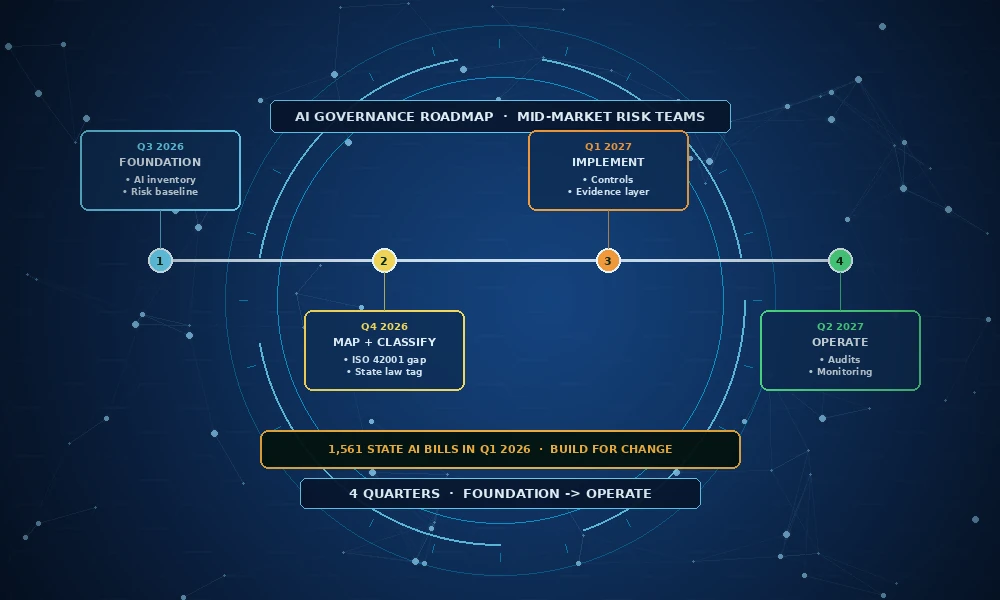
For organizations starting from a low maturity baseline, the sequence below typically produces measurable ROI within four quarters.
- Quarter 1. Establish baseline. Inventory all AI systems in use, catalog incidents and near-misses from the prior 12 months, map current frameworks in scope (ISO 42001, EU AI Act, NIST AI RMF, sector-specific). Identify the role groups that will be trained.
- Quarter 2. Train the core. GRC team, AI engineering leads, and executive sponsors first. This is the group that builds the management system itself. Pair training with a platform stand-up so the knowledge has somewhere to live.
- Quarter 3. Train the periphery. Procurement, legal, HR, marketing, and product. These are the teams that generate the most AI deployment volume and the most incident risk. Tie training completion to the AI procurement gate.
- Quarter 4. Measure and report. Compare incident rates, audit readiness scores, and procurement cycle times against the Q1 baseline. Brief the audit committee. Use the year-one numbers to commit to a multi-year program.
Frequently Asked Questions
How long does it take to see ROI on AI governance training?
Most U.S. organizations with more than 500 employees see measurable ROI within 9 to 12 months. The fastest returns come from incident reduction and procurement-speed improvements, both of which start producing data inside the first two quarters. Audit and certification savings show up in the cycle following the training, usually starting in months 6 to 12.
What’s the difference between AI governance training and general AI ethics training?
AI ethics training focuses on principles, values, and high-level frameworks. AI governance training operationalizes those principles into management-system controls, regulatory mappings, and day-to-day decisions. Governance training teaches people how to classify a system under the EU AI Act, document evidence under ISO 42001 Clause 7.5, and run an Annex A control assessment. Ethics training is necessary but not sufficient.
Do we need ISO 42001 certification to justify governance training?
No. Certification is one possible outcome, not the only justification. Many organizations train against ISO 42001 and the EU AI Act because their enterprise customers, insurers, or regulators expect a defensible governance program, even without a formal certificate. Training builds the evidence base regardless of whether the organization pursues certification this year or next.
Who should be trained first if budget is limited?
Three groups, in order: the GRC or compliance team that will own the AI Management System, the AI engineering or data science leads who deploy models, and the executive sponsor or board liaison who carries oversight responsibility. Together those three layers can establish a management system. Wider rollout to procurement, legal, HR, and business teams comes next, ideally inside the same fiscal year.
How does AI governance training interact with existing cybersecurity awareness training?
They overlap in roughly 20 percent of content (data classification, incident reporting) and diverge sharply elsewhere. Cybersecurity training teaches people to protect data from external threats. AI governance training teaches them to recognize AI systems, classify their risk, and route them through the right approval gate. Combining the two into a single course is a common mistake that produces a course covering neither well.
Is generative AI use covered under the same training program?
It should be. ISO 42001 covers AI management systems generally, including generative systems, and the EU AI Act treats general-purpose AI models as a distinct category with its own obligations. Training should explicitly address employee use of public generative AI tools, internal generative AI deployments, and the data-handling rules for both. Pretending generative AI is a separate workstream is how the largest current incident category gets ignored.
Conclusion
AI governance training pays back because it changes what happens before an incident, before an audit, and before a procurement decision. The numbers are visible: fewer breaches involving shadow AI, faster ISO 42001 readiness, shorter procurement gates, and a workforce that can keep pace with the EU AI Act and the U.S. patchwork that’s emerging behind it. The organizations seeing the strongest returns are the ones that pair training with a system of record, measure their baseline before they start, and brief their audit committee with concrete year-one numbers.
If your team is building the case for AI governance training this fiscal year, start by inventorying the AI systems already in use and the incidents tied to them. The ROI math gets easier from there.
Govern365.ai, by the Global AI Certification Council, gives compliance and AI teams the model registry, risk assessment workflows, and audit evidence management to apply governance training in practice. Start your 14-day free trial at govern365.ai