
AI Regulation in India: Who Is Actually Making the Law
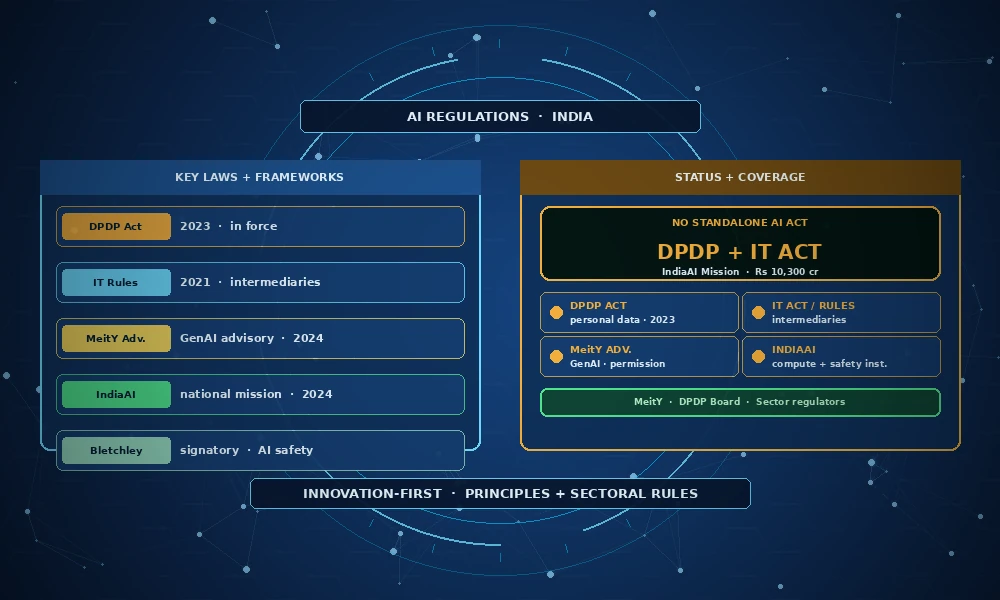
India’s AI regulator, on the evidence of the past year, is not MeitY. Between 2 July and 12 September 2026 three Indian courts decided questions that shape how AI can be built and used here. Over the same period, and indeed since the Digital Personal Data Protection Act received assent in August 2023, no Indian […]
California AI Laws: What Binds You Today, What Is Signed but Dormant, and What Is Still on the Governor’s Desk
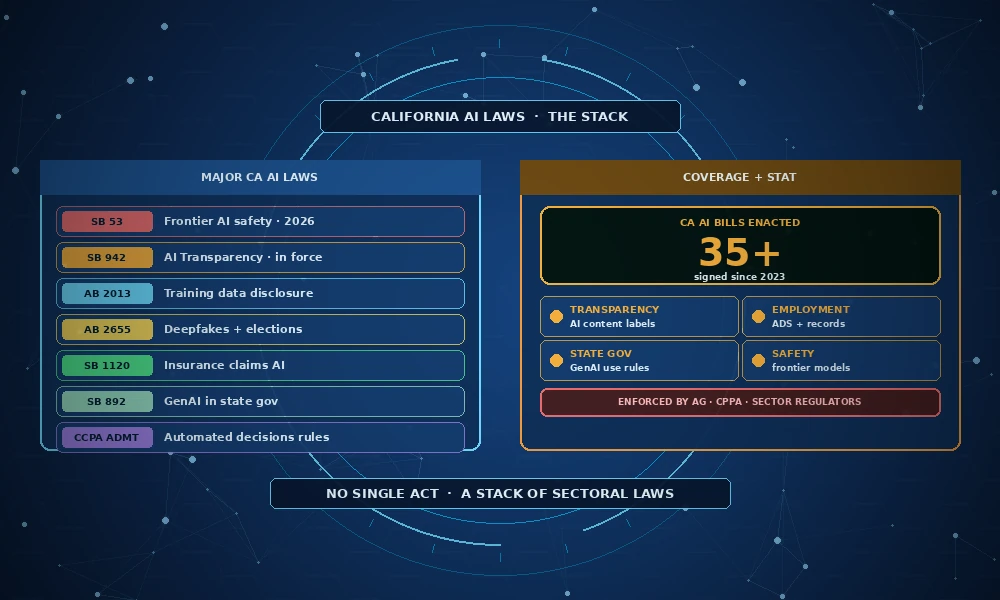
Most California AI law coverage collapses three different things into one list: law that binds you now, law that has been signed but does not operate yet, and bills that are not law at all. The distinction is not pedantic. California AI law gained four statutes last week and none of them binds anyone until […]
Texas TRAIGA: What the AI Law Requires, What It Leaves Out, and What the Attorney General Uses Instead
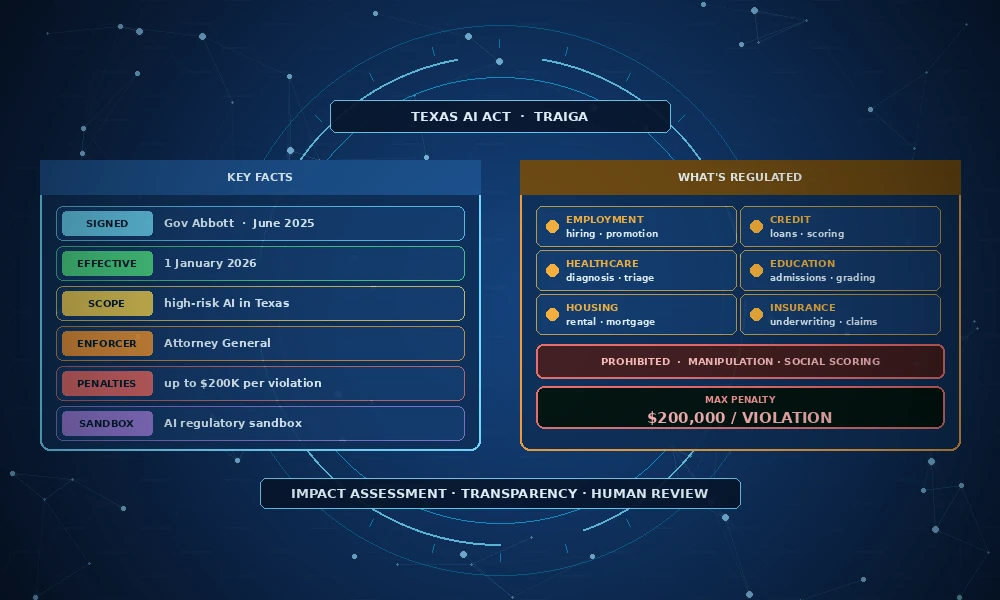
Texas has the widest AI statute in the United States by scope and one of the narrowest by duty. The Texas Responsible Artificial Intelligence Governance Act reaches any company whose product or service is used by a Texas resident, with no revenue floor and no small-business exemption, and then asks that company for almost nothing. […]
Global AI Regulation Tracker: Which Countries Have Binding AI Law in 2026
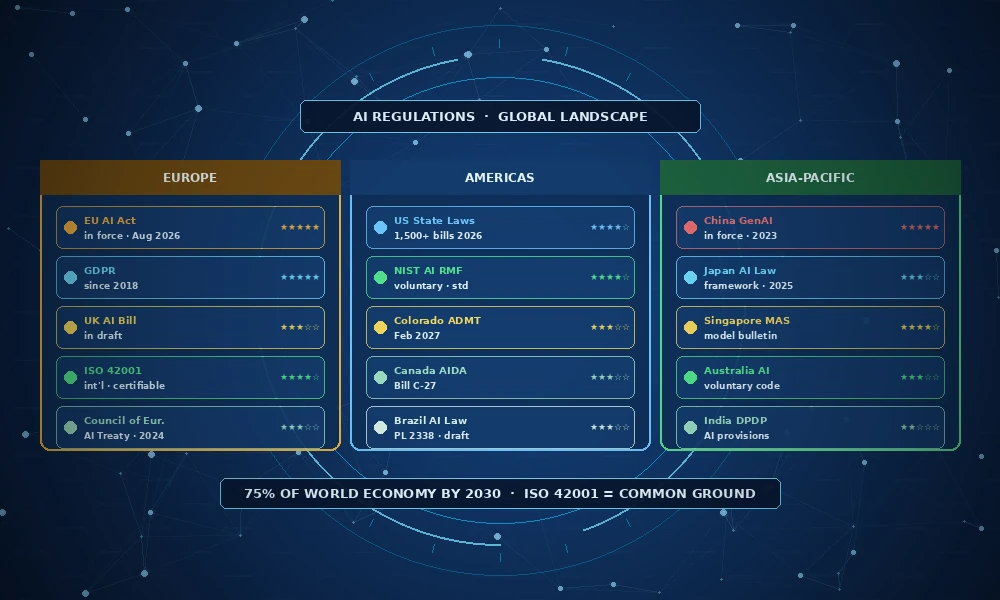
Five claims about global AI regulation are repeated so widely that they have stopped being checked. Each one fails against the text of the instrument it describes, and each failure sends a compliance budget somewhere it should not go. Correcting them is more useful than another country list, because the errors are not at the […]
AI Compliance Evidence: The Records That Prove an AI Obligation Was Met
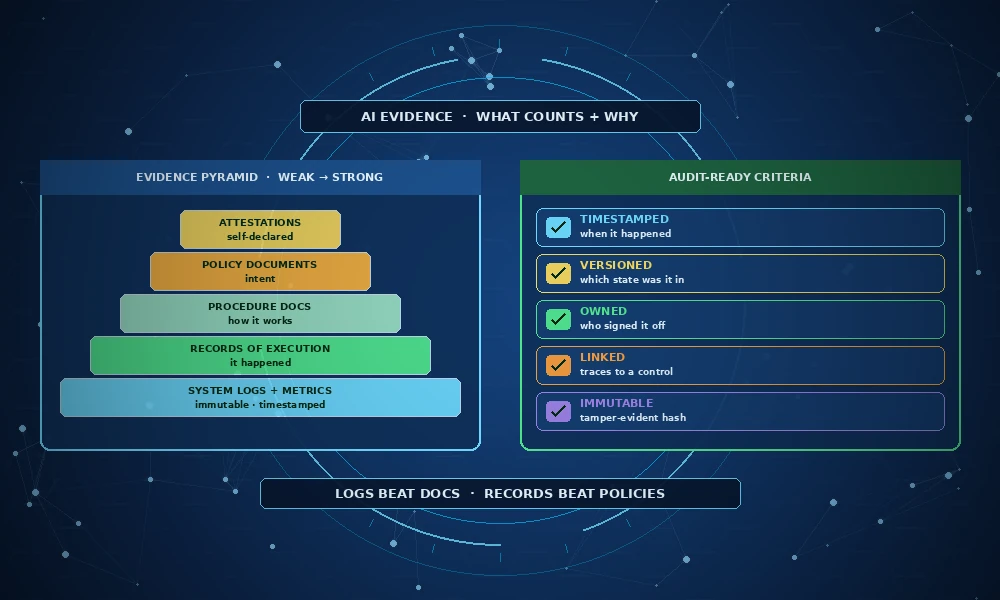
AI compliance evidence is the set of dated, attributable records that show an AI obligation was met: the technical file, the event logs, the risk assessment, the approval, the incident report. Auditors and market surveillance authorities test records rather than intentions. Each obligation in the EU AI Act, ISO/IEC 42001 and the NIST AI Risk […]
AI Governance in the United States: Laws, Frameworks and Evidence Requirements
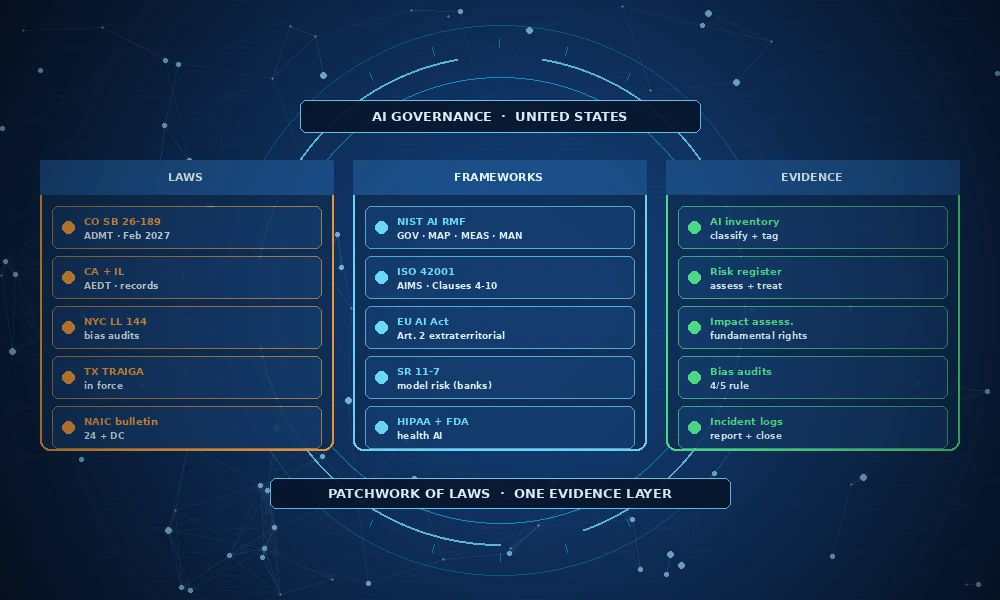
By March 2026, lawmakers in 45 states had introduced 1,561 AI-related bills, more than the full total for 2024, according to legislative tracker MultiState. No comprehensive federal AI law exists to unify any of it. That gap is the defining fact of AI governance in the United States right now. Executive orders set direction without […]
AI Governance Checklist Template for Inventory, Risk and Evidence
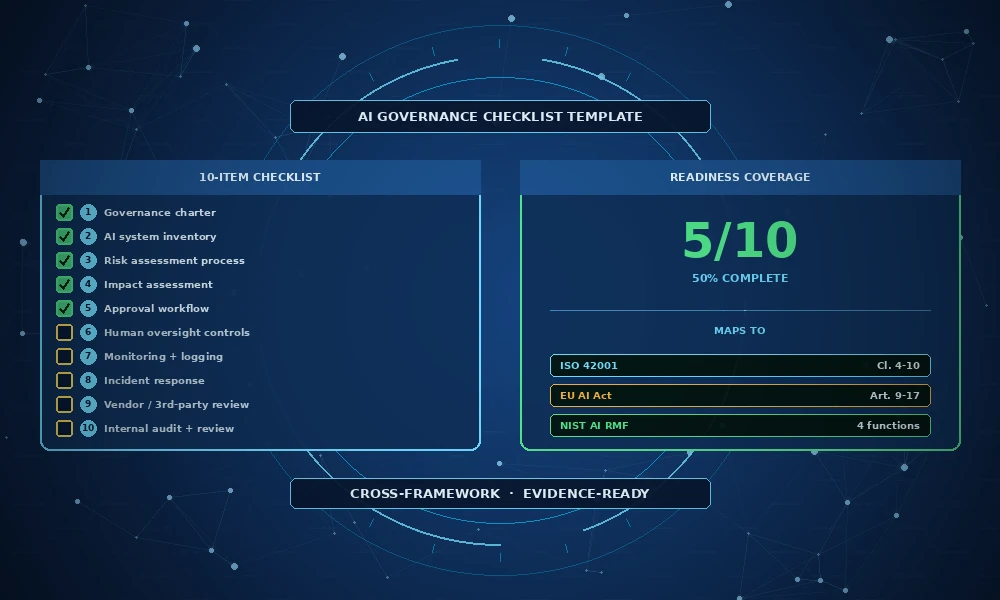
Gartner projects that spending on AI governance platforms will reach $492 million in 2026 and pass $1 billion by 2030. One line in that February 2026 analysis matters more than the headline number: the capabilities regulators now expect are data usage mapping and evidence collection. Not a policy binder. Not a committee charter. A live […]
AI System Inventory: How to Track Every Model, Tool, Agent and Vendor AI System
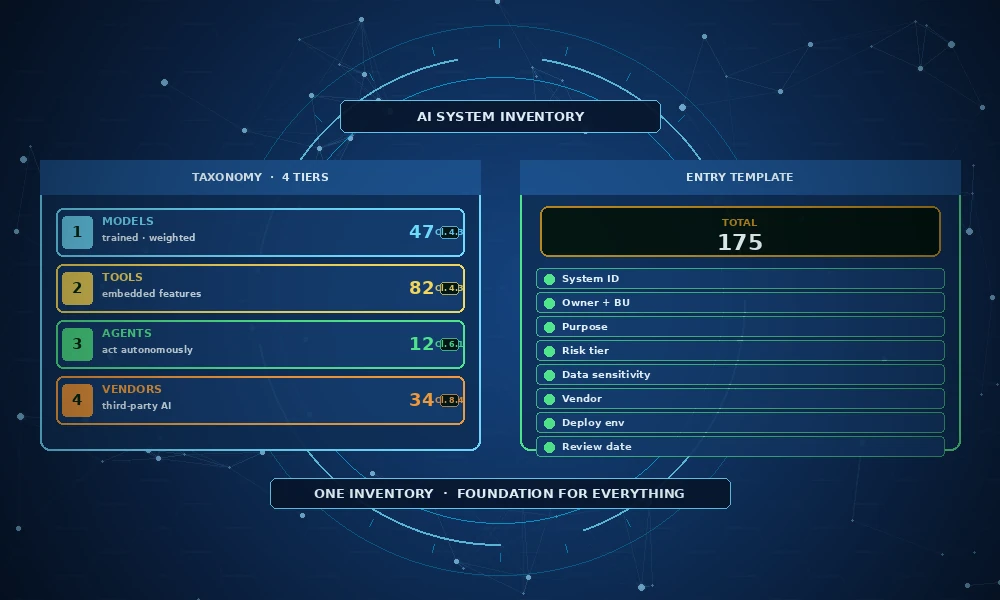
Global spending on AI governance platforms is projected to reach $492 million in 2026 and surpass $1 billion by 2030 as AI regulations expand to cover 75% of the world’s economies, according to Gartner, February 2026. None of that spending delivers defensible governance without one foundational artefact: a complete, current AI system inventory. The timing […]
Third-Party AI Risk Management for Vendor AI Systems
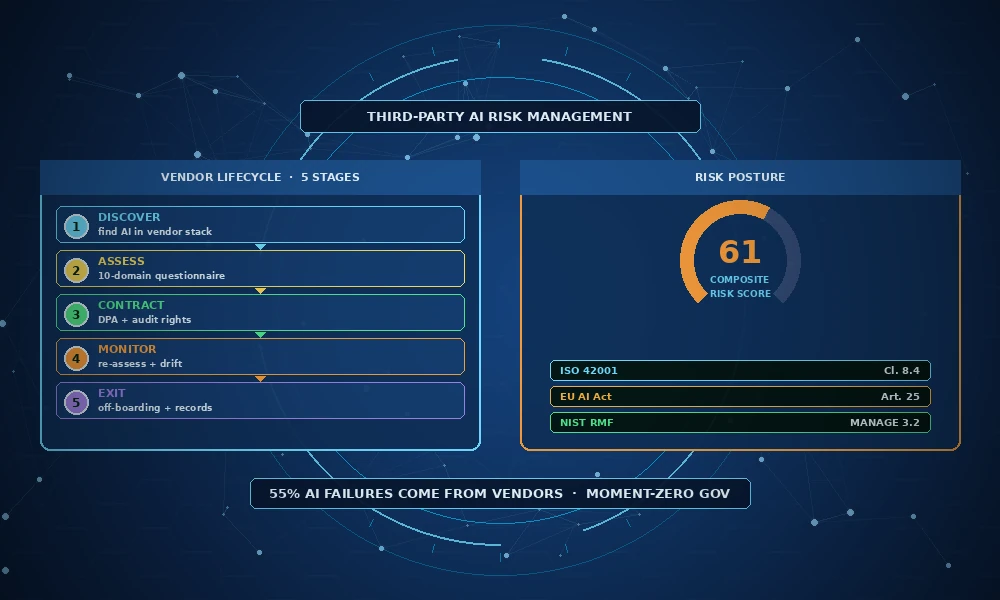
Twenty percent of breached organizations in 2025 traced the incident back to shadow AI, unsanctioned AI tools operating outside security oversight, and those breaches cost an average of $670,000 more than the rest, according to IBM’s Cost of a Data Breach report. Most of that exposure did not come from AI your engineers built. It […]
Shadow AI Governance: Finding Unapproved AI Use Inside Your Company
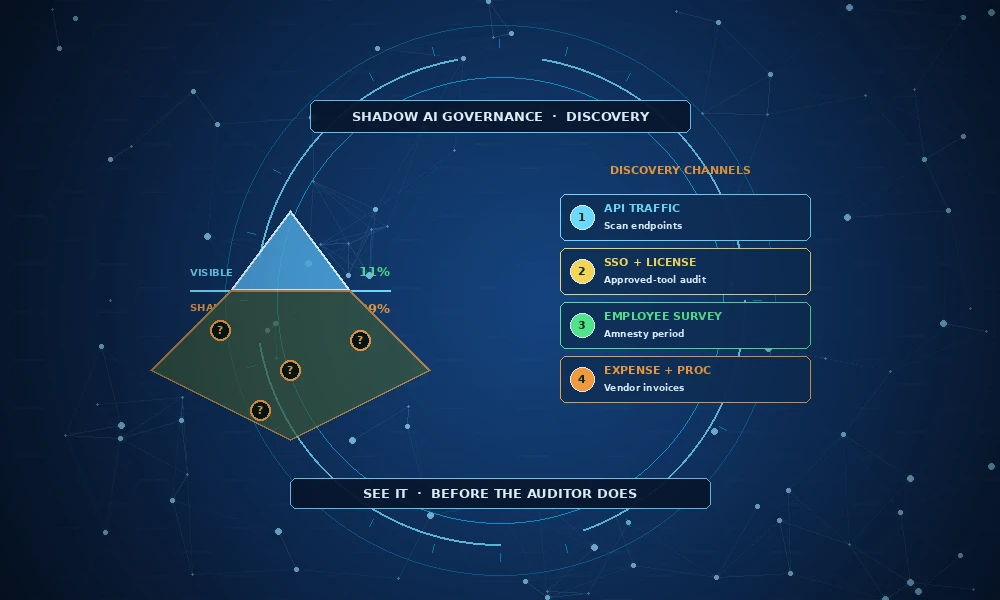
Shadow AI programmes usually sit at level zero and describe themselves as level three. Shadow AI programmes are graded here by one test: what question can you answer today, with evidence, without asking anyone to self-report. Each level below carries the question it answers, the work it takes, and the published figures on what staying […]